
EH Out Loud
The podcast where we investigate how technology mediates what it means to be human.

The podcast where we investigate how technology mediates what it means to be human.
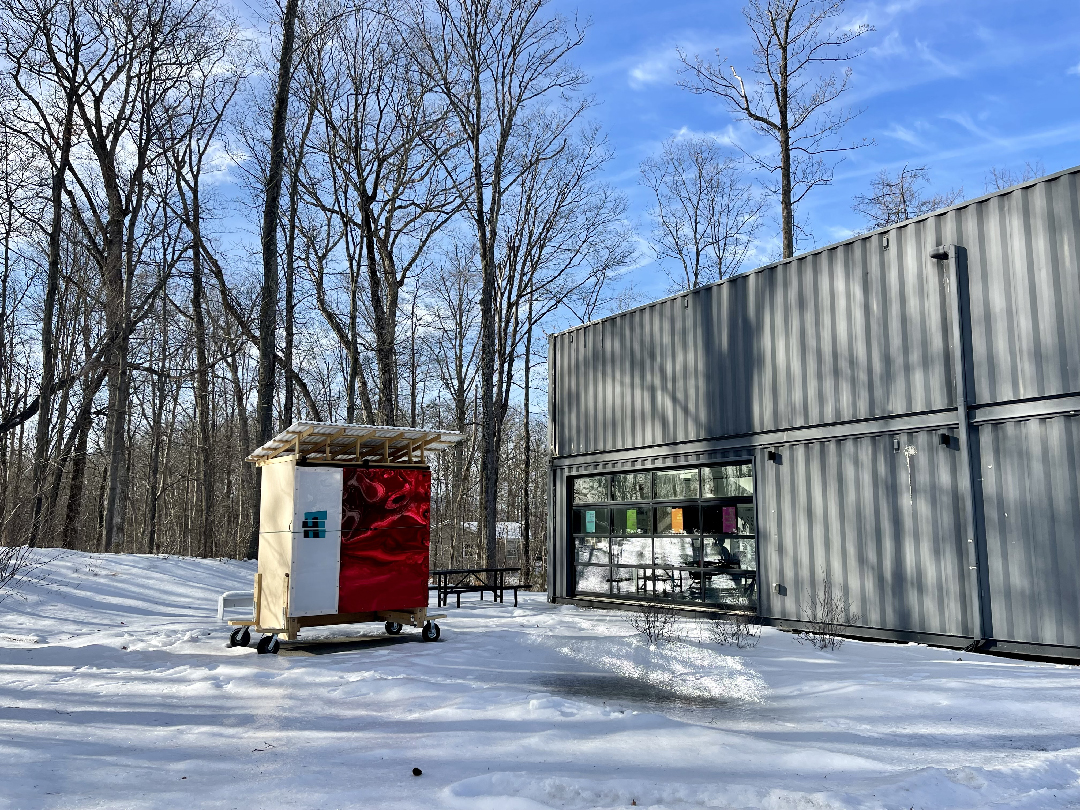
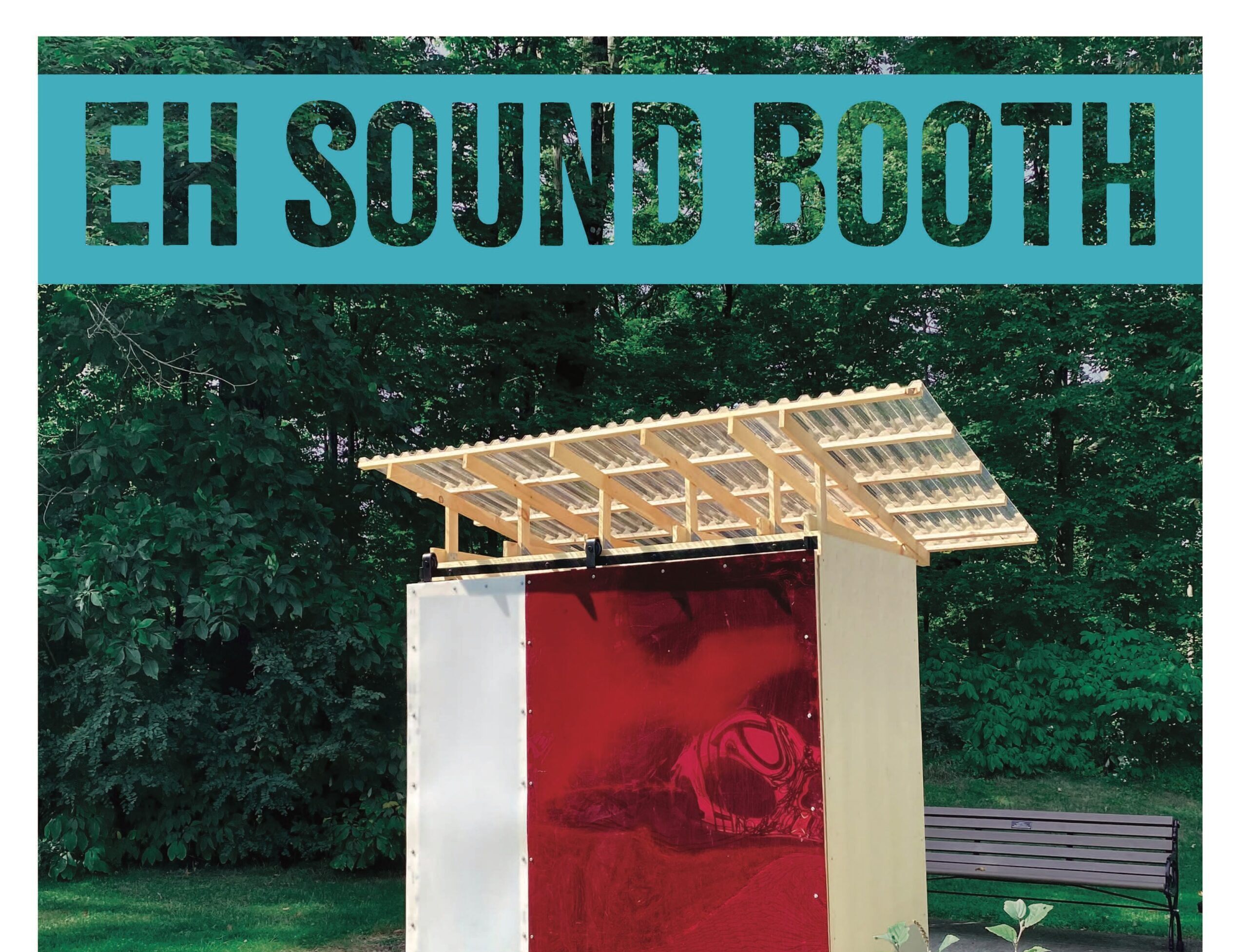
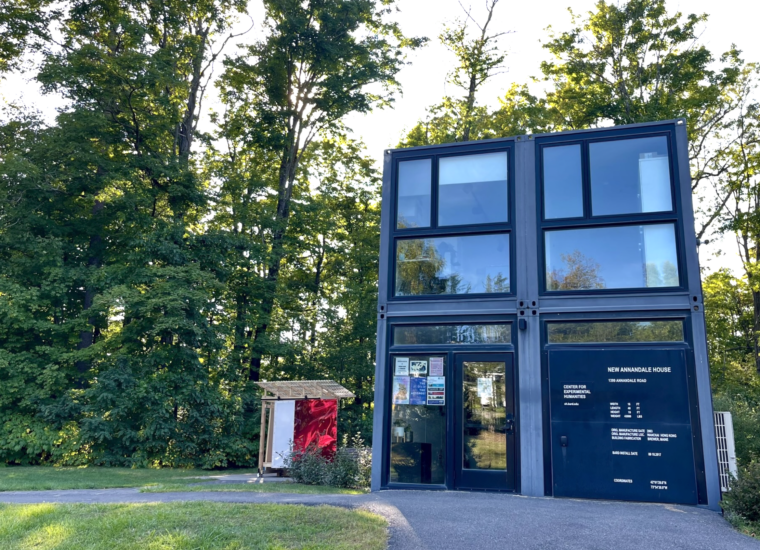
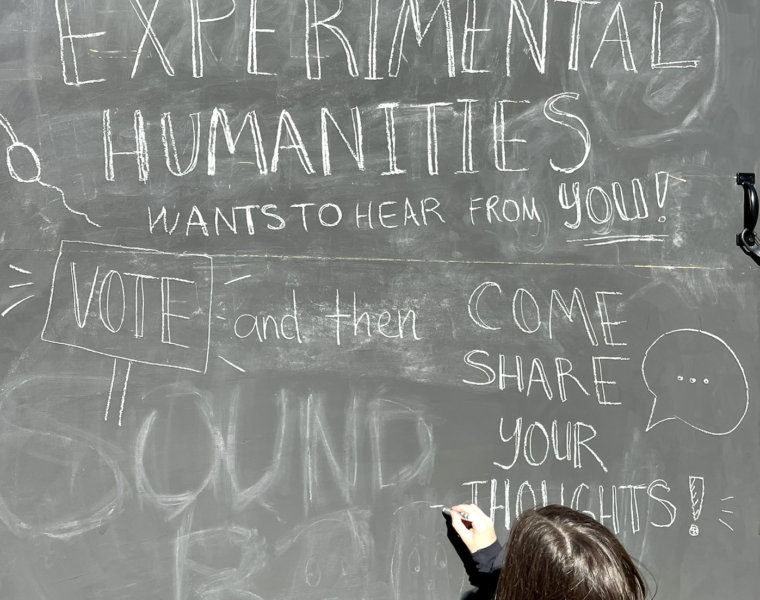
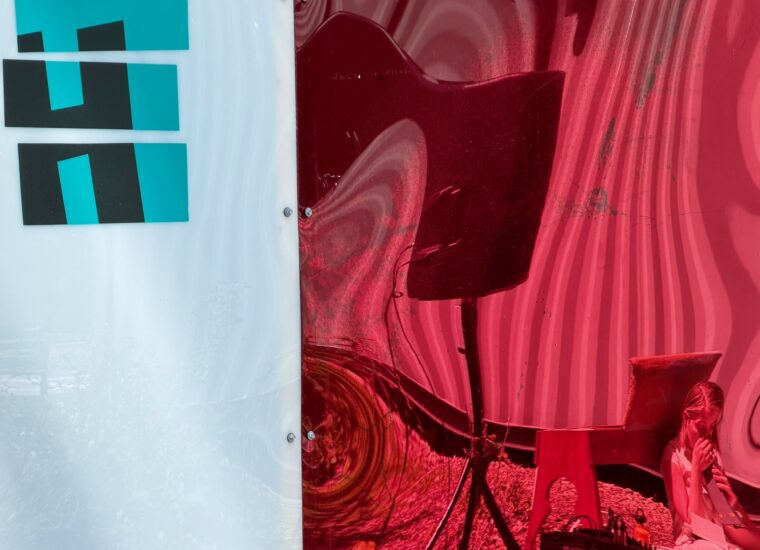
Inspired by NPR’s StoryCorps oral history project, the EH Portable Sound Booth was used over the course of the 2024-2025 academic year to record a diverse cross-section of the Bard community about the 2024 election and postelection sentiments. Interviews or self-recordings focused on the ways media shapes, informs, and produces conditions for listening (and not listening) around politics and issues of democracy, building up to the election, the inauguration, and its aftermath. Pop-up events throughout the academic year were organized in collaboration with campus partners such as the Center for Civic Engagement, Rethinking Place, the Stevenson Library as well as connected to several cross-listed EH courses. These “community sound portraits” will be made available as part of an archive reflecting the current political moment. Interviews or self-recordings will all remain anonymous and to date we have over 80 interviews.
Sound Booth designed and fabricated by EH Media Corps member, Inju Keum.
Season four was supported in part by an inclusion grant from the Office of the Dean.
Teaser 1: Election Playlist
Welcome to season four with host Owen Setlik and students in the Bard College Conservatory.
Singers: Betsy Bayer, Adriana Rivera Corujo, and Hayeon Kim
Teaser 2: Three Words
What three words pop into your head when you hear the word democracy?
Episode 1: Putting it Into Context
In this episode, Owen has a conversation with Bard politics professor Bill Dixon about weighing interviewees’ hopes and fears for the second Trump presidency with the actual actions of the administration. Recorded in mid-Fall 2025.
Episode 2: Presidential Theory and the Future
In this episode, Owen continues his conversation with Bill Dixon by trying to understand Trump’s second term through the lens of presidential theory, and how that theory might inform predictions of what to expect in American politics.
Episode 3: Ali Faqirzada and ICE at Bard
In this episode, Owen has a conversation with Bard Chief of Staff Malia Du Mont about ICE detainee and Bard student Ali Faqirzada and what members of the Bard community can do to help him.
William Dixon (B.A., State University of New York at Albany; Ph.D., Johns Hopkins University) is the Director of the Language and Thinking Program. He has taught in the program since 2010. He was an Academic Fellow for Political Studies at the Bard Prison Initiative from 2012-16. He was also a 2010-11 Post-Doctoral Fellow at the Hannah Arendt Center for Politics and the Humanities at Bard College. He has taught political theory, comparative politics, and political economy at Johns Hopkins, Bard College, and Oberlin College. His research interests include contemporary political theory, ancient political thought, philosophies of nature, cosmopolitanism, and prudential theories of democracy. Some of the political thinkers who interest him most include Aeschylus, Thucydides, Machiavelli, Rousseau, Marx, Walt Whitman, Nietzsche, Max Weber, Hannah Arendt, Michel Foucault, and Gilles Deleuze. He is currently working on a project on democracy, capitalist globalization, and global warming.
Malia K. Du Mont is Chief of Staff and Vice President for Strategy and Policy at Bard College, where she facilitates long-term planning and community and government relations, and helps oversee College programs including the Bard Conservatory of Music, Bard Fisher Center for the Performing Arts, Bard Music Festival, Bard Graduate Center for Design History and Material Culture, US-China Music Institute, Center for Human Rights and the Arts, and the Bard Center for Curatorial Studies and Hessel Museum of Art. An Army veteran and previous Pentagon official, Malia chairs Congressman Pat Ryan’s Veterans and Military Families Advisory Board and previously served on the advisory council for Arts in the Armed Forces, an independent non-profit. She also serves on the boards of Arts Mid-Hudson, the World Affairs Council Mid-Hudson Valley, and the American University of Afghanistan. A pianist, choral singer, and poet, Malia received her B.A. in Chinese from Bard College and her M.P.P. from Harvard Kennedy School.